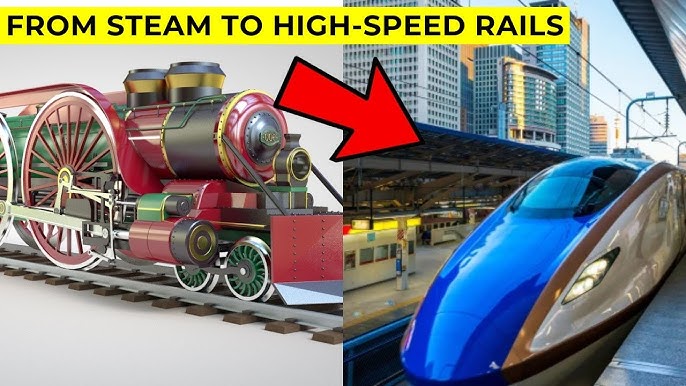
From Steam to Speed: The Evolution of Trains
From Steam to Speed: The Evolution of Trains – Trains have always played a massive role in shaping modern civilization. Long before airplanes filled the skies and highways dominated the land, railways connected cities, industries, and people. The story of trains is not just about machines, but about progress, ambition, and the constant push for speed and efficiency.
From the early days of steam-powered locomotives to today’s high-speed and magnetic levitation trains, rail transport has evolved dramatically. Each phase reflects the technological mindset and needs of its era, making trains one of the most fascinating inventions in human history.
The Birth of Steam Trains and Industrial Power
The evolution of trains began in the early 19th century with steam locomotives. These machines emerged during the Industrial Revolution, a time when factories needed faster ways to move raw materials and finished goods.
Steam trains used coal-fired boilers to produce steam, which powered pistons connected to wheels. While primitive by modern standards, they were revolutionary at the time. Suddenly, transportation was no longer dependent on horses or waterways alone.
Railways expanded rapidly across Europe and North America. Towns grew around train stations, trade flourished, and travel times were reduced from days to mere hours. Steam trains became symbols of industrial strength and national pride.
Steam Trains and Social Change
Steam locomotives didn’t just transform industry. They reshaped society. People could travel farther for work, leisure, or education. Newspapers, mail, and fresh food moved faster than ever before.
Railways also standardized time. Before trains, local time varied from town to town. The need for train schedules led to the creation of time zones, a change that still affects daily life today.
The Shift to Diesel and Electric Trains
By the early 20th century, steam trains began to show their limitations. They required heavy maintenance, large crews, and constant fuel and water supplies. This opened the door for diesel and electric trains.
Diesel locomotives offered better efficiency and reliability. They were easier to operate and cheaper to maintain, making them ideal for long-distance freight and passenger services. Many countries began phasing out steam engines in favor of diesel power.
Electric trains, on the other hand, brought cleaner and quieter operation. Powered by overhead wires or third rails, electric locomotives became popular in urban areas and busy corridors where pollution and noise were major concerns.
Why Electric Trains Changed Everything
Electric trains allowed for faster acceleration and higher speeds. This made them perfect for commuter systems and metro networks. Cities like London, New York, and Tokyo built extensive electric rail systems that still serve millions of passengers every day.
The shift from steam to electric marked a turning point. Trains were no longer just industrial tools; they became essential components of modern urban life.
The Rise of High-Speed Rail
The next major leap in the evolution of trains came with high-speed rail. In 1964, Japan introduced the Shinkansen, also known as the bullet train. This innovation redefined what rail travel could be.
High-speed trains operate on specially designed tracks and can reach speeds exceeding 300 km/h. They combine advanced aerodynamics, powerful electric motors, and sophisticated safety systems.
Countries like France, China, Germany, and Spain followed Japan’s lead, investing heavily in high-speed rail networks. These trains compete directly with airplanes on short and medium-distance routes, offering comfort, reliability, and lower environmental impact.
Speed Meets Sustainability
High-speed trains are not just fast; they are also energy-efficient. Compared to air travel and cars, they produce significantly fewer carbon emissions per passenger.
As governments focus more on sustainable transportation, high-speed rail is often seen as a key solution. It supports economic growth while reducing dependence on fossil fuels.
Maglev and the Future of Train Technology
At the cutting edge of train evolution lies magnetic levitation, commonly known as maglev. Unlike traditional trains, maglev systems use powerful magnets to lift the train above the track, eliminating friction.
This technology allows trains to reach incredible speeds, sometimes exceeding 600 km/h in test conditions. China currently operates the most well-known commercial maglev line, showcasing the potential of this futuristic transport.
While maglev systems are expensive to build, ongoing research aims to make them more accessible. As technology advances, they may become a viable option for long-distance travel in the future.
Smart Trains and Digital Railways
Beyond speed, modern trains are becoming smarter. Artificial intelligence, automation, and real-time data systems are being integrated into rail networks. These technologies improve safety, efficiency, and passenger experience.
Driverless trains already operate in some metro systems, and predictive maintenance helps prevent breakdowns before they happen. The railway of the future is as much digital as it is mechanical.
Why Trains Still Matter Today
Despite competition from planes and cars, trains remain one of the most reliable forms of transportation. They move massive numbers of people and goods efficiently, especially in densely populated regions.
Railways also play a crucial role in reducing traffic congestion and environmental impact. As cities grow and climate concerns intensify, trains offer a practical and scalable solution.
From steam-powered giants to sleek high-speed machines, trains continue to evolve. They reflect humanity’s ongoing desire to move faster, smarter, and more sustainably.
Conclusion: A Journey That Never Stops
The evolution of trains is a story of innovation and adaptation. Each era introduced new technologies that reshaped transportation and society. Steam trains powered industrial growth, diesel and electric trains modernized railways, and high-speed trains brought efficiency and sustainability into focus.
As we look ahead, the journey is far from over. With maglev systems, smart railways, and greener energy sources, trains are set to remain a vital part of global transportation for generations to come.
From steam to speed, the railway journey continues—always moving forward.